The project Rural Citizens Labs 4 EU is a European project that brings together 4 countries and 5 partner organisations and aims at empowering rural citizens, promoting active citizen participation supported by democratic debates and intercultural exchanges. The topic of democracy and disinformation focused the debates, as one of the greatest challenges for democracies in the EU, endangering the project of peace and solidarity that we have shared in the European Union for more than 70 years.
 Active for a two year period (sept 2022- Aug 2024), the project has been financed in the framework of the European «Citizens, Equality, Rights and Values» Programme which has the objective of promoting the rights and values of the EU based on four pillars:
- Equality, rights and gender equality.
- Citizen involvement (this is the one that concerns this project).
- Daphné, which consists of the fight against violence (children, teenagers, women).
- – EU values (democracy, freedom and unity).
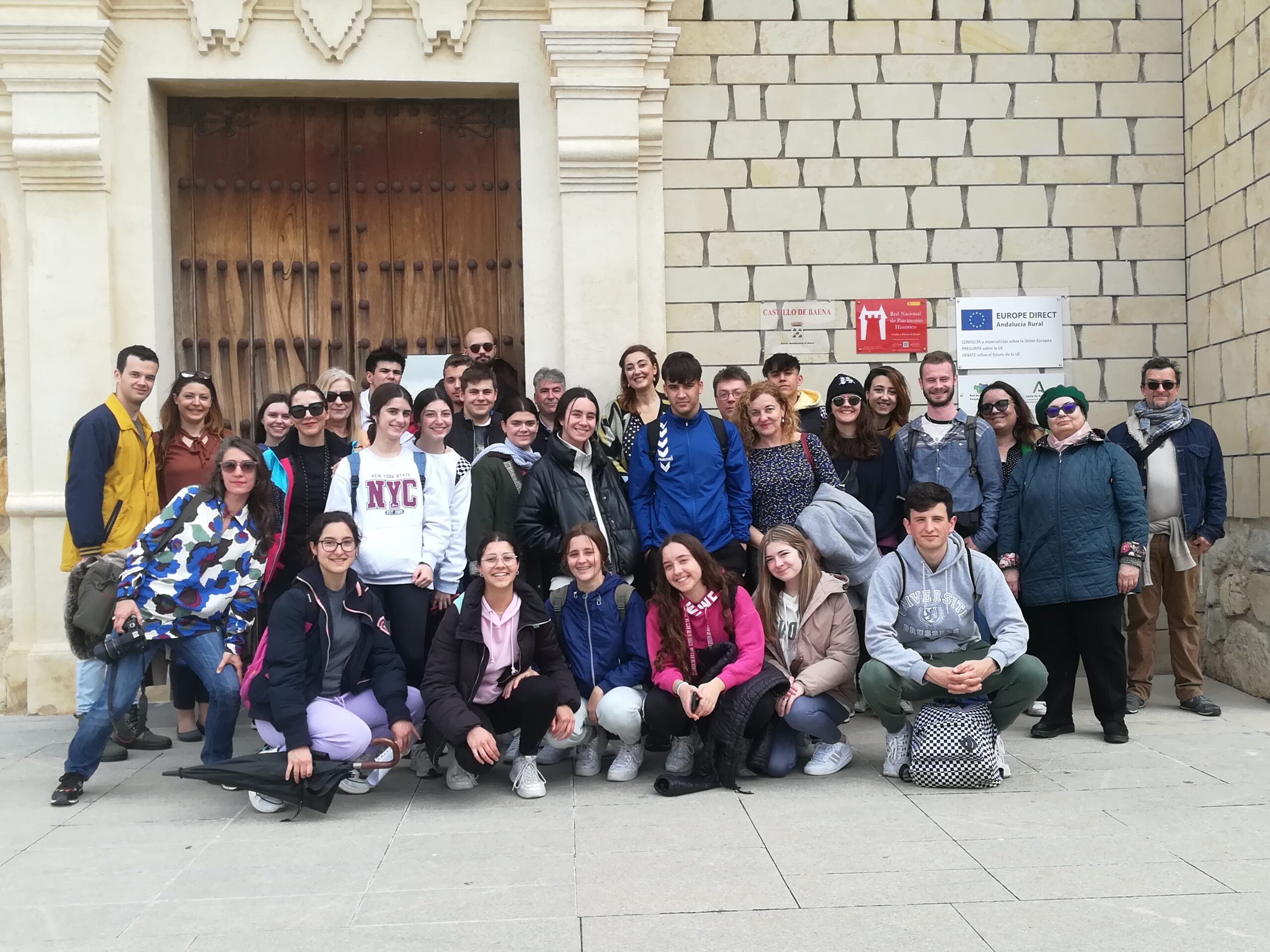
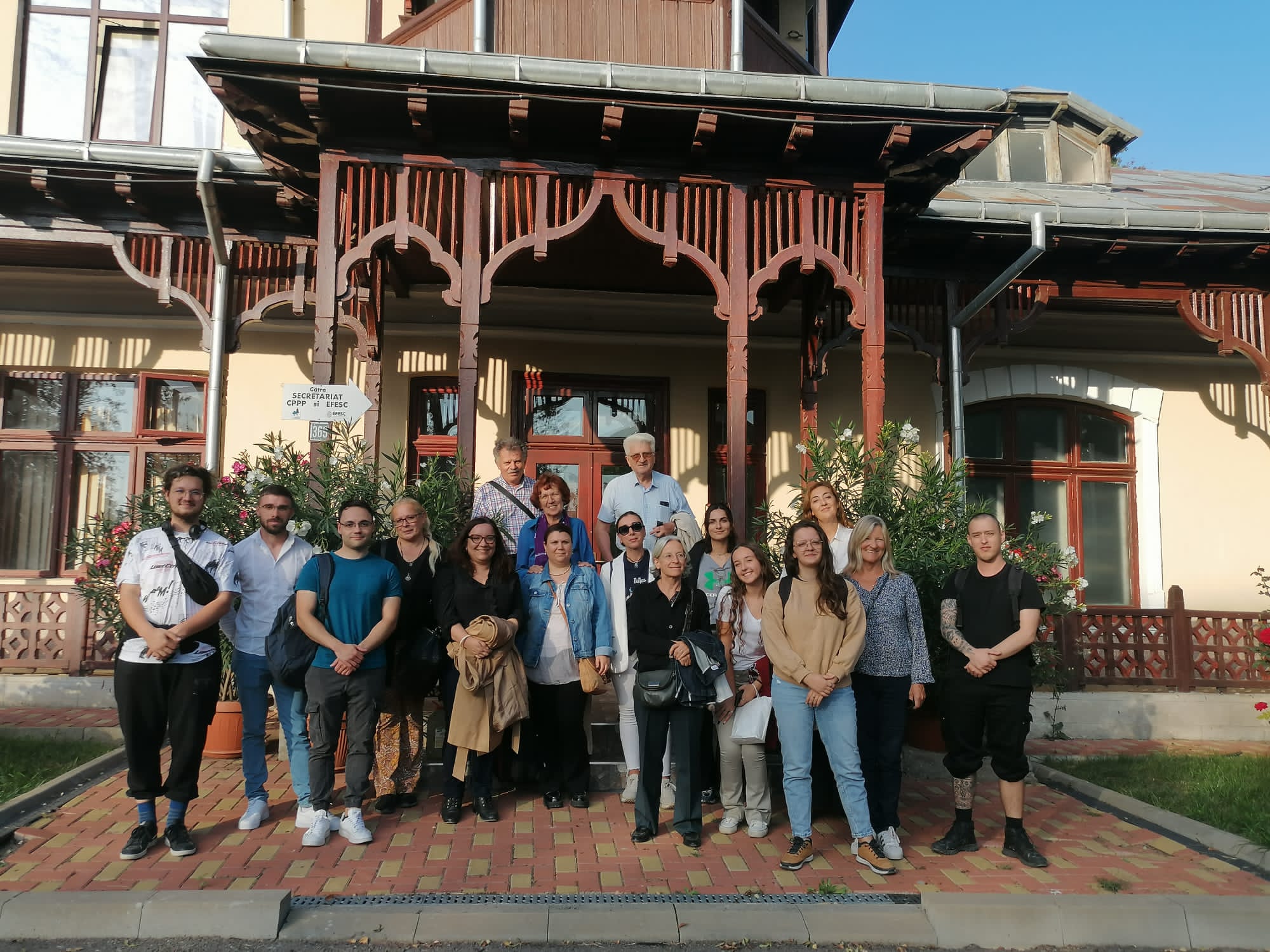
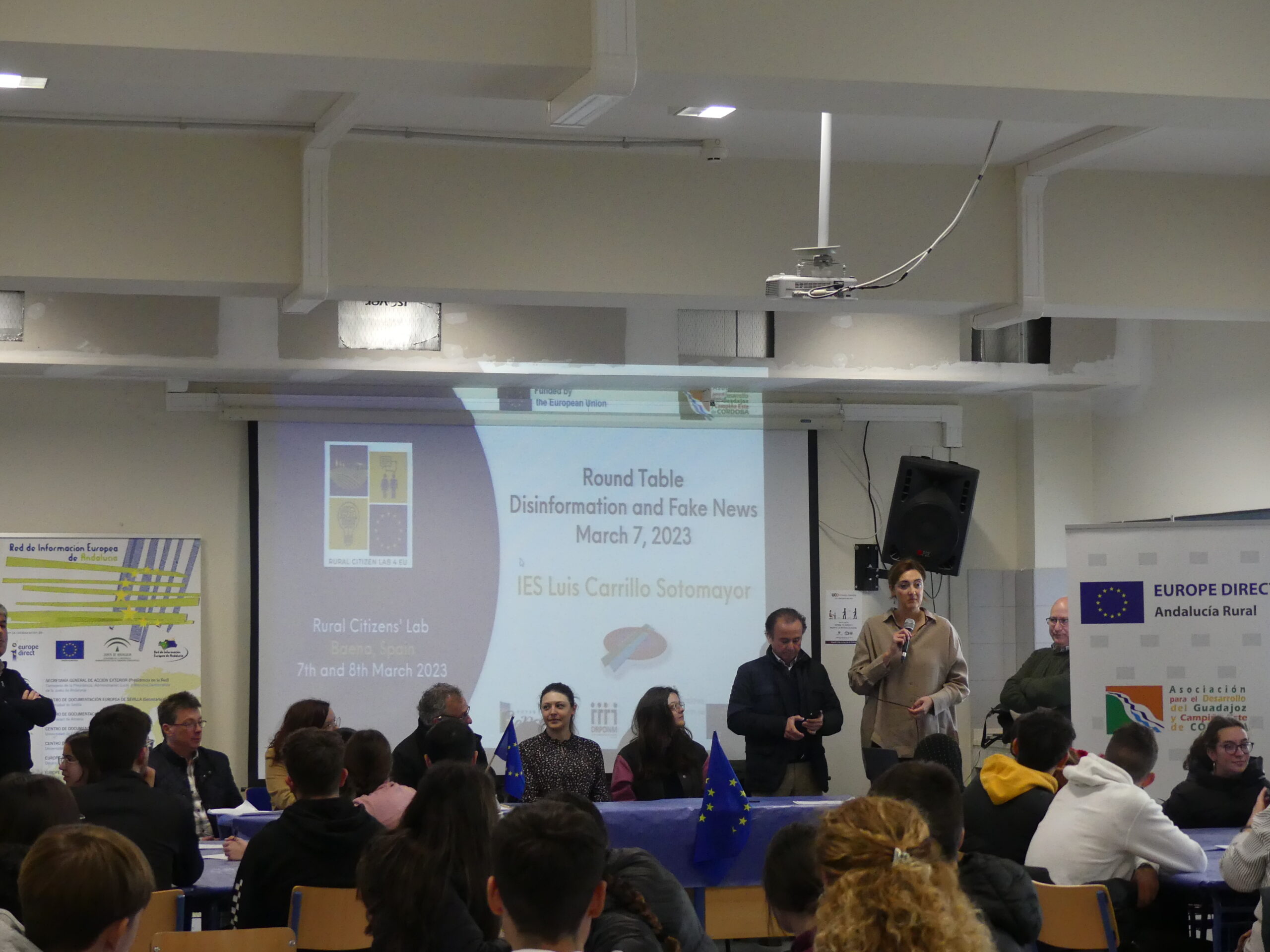
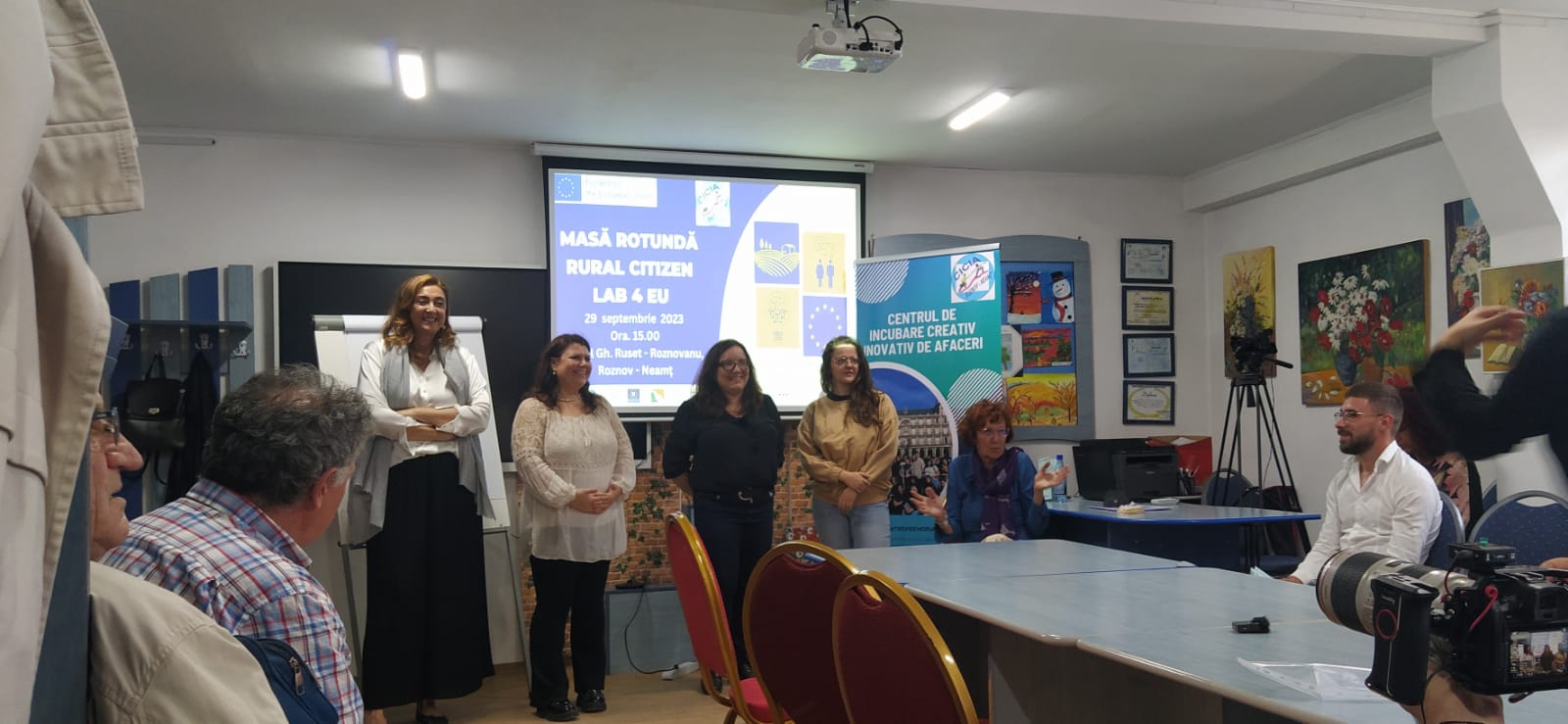
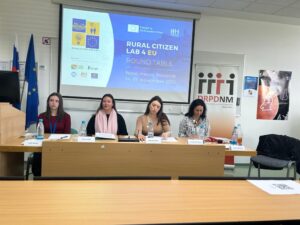
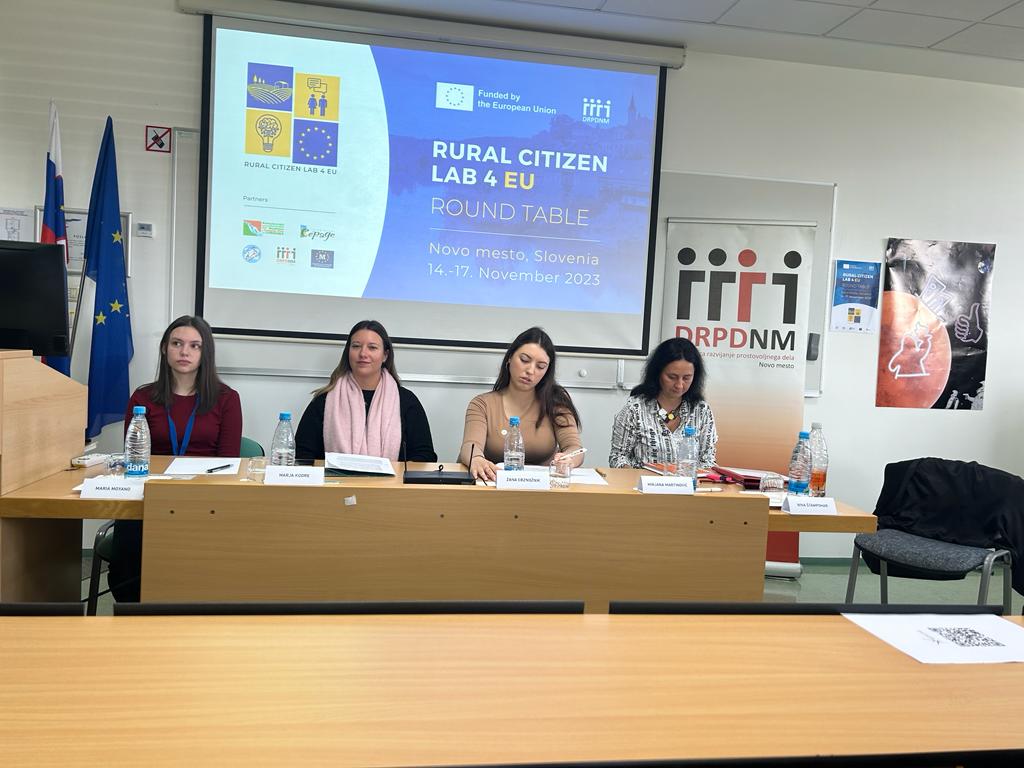
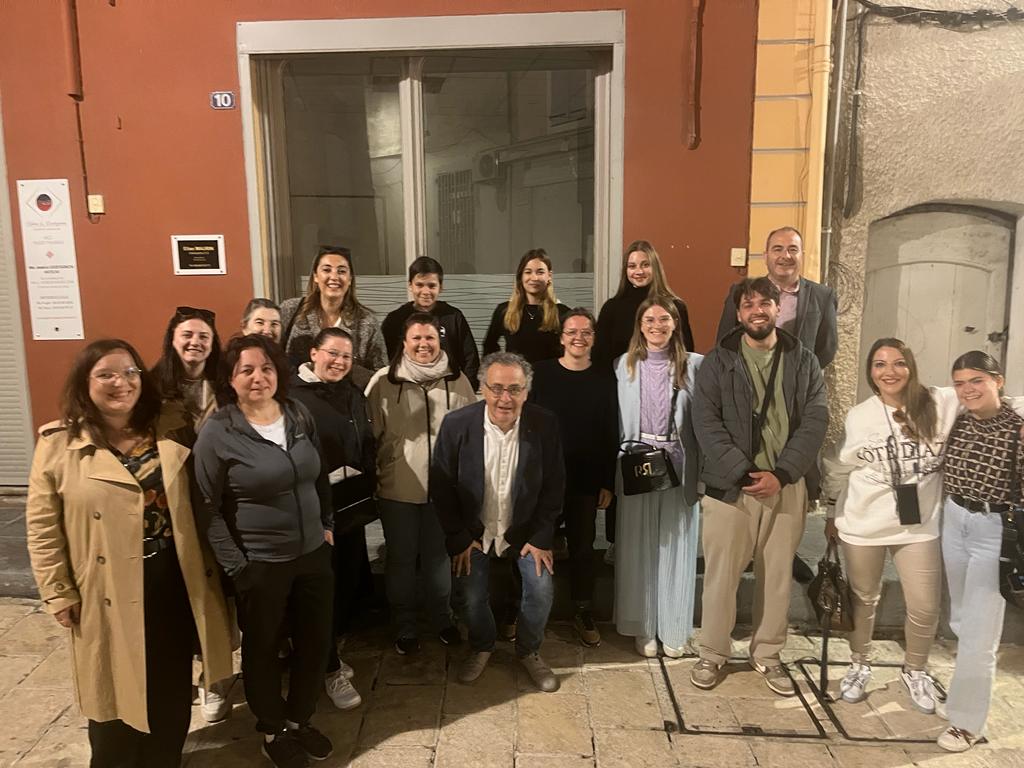 Rural Citizens Labs 4 EU partnership counts with the following organisations: ADEGUA (Spain), DRPDNM (Slovenia), CICIA (Romania) and Maison de L’Europe Montpellier (France) and has been led by CEPAGE (France). In each of these countries, two Citizens Workshops were held (one with young people in rural areas and the second one with the general public) with the objective of gathering their opinions about disinformation and democracy at European and local levels, with the result of more than 600 participants. The word was given equally to people from different generations, genders and nationalities so that they could exchange their opinions.
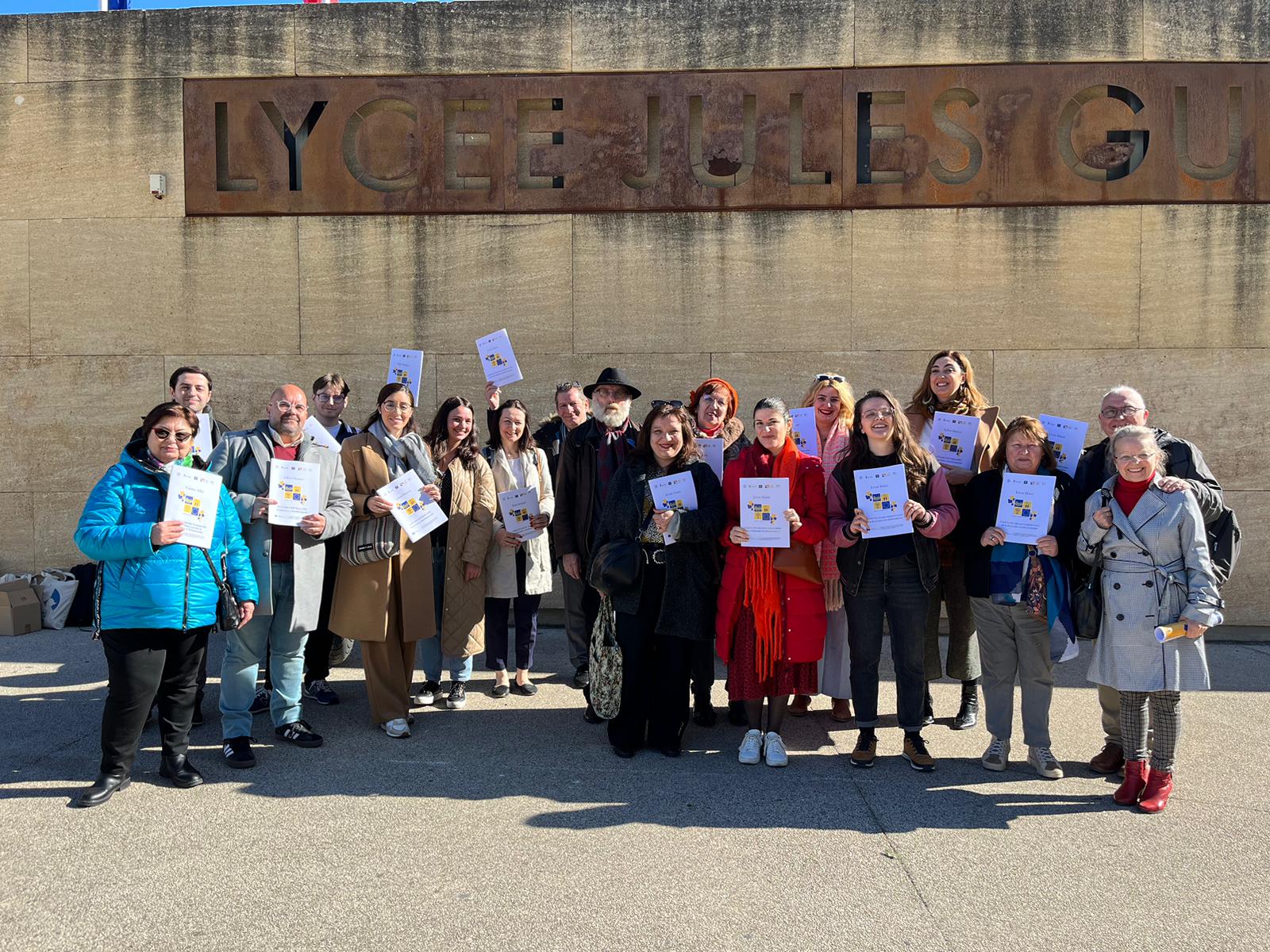 These workshops were organised in a participatory way during 2023 in all the participating countries, the results were presented in March 2024 in the form of a White Book.
These are some of opinions and ideas gathered: in our White Book:
- Democracy
- Democracy is the key to peace and freedom. In this sense, they think the EU has a key role.
- In some places they identify extremism as one of the biggest threats to democracy, as well as corruption.
- Young people do not feel listened to by their governments.
- Some people do not understand the importance of living in a democracy.
- Older people perceive a decline in education.
- Sense of remoteness from political decision-makers.
- The limitation of representative democracy.
- Democracy is the key to peace and freedom. In this sense, they think the EU has a key role.
- Disinformation
 New technologies and social networks, together with artificial intelligence, increase the problem of disinformation. However, social networks are crucial for freedom of expression.
- Children have access to the internet at an increasingly younger age.
- Some age ranges are more likely to believe fake news.
- Journalists feel under a lot of pressure; they also perceive distrust towards their work.
- Control of the media is a double-edged sword.
- People have access to too much information; it makes them anxious and overwhelmed.
- Living in rural areas makes it difficult to understand information about the EU.
- Economic disinformation: the terms are difficult to understand.
In addition to their views, participants shared some ideas on how to fight disinformation and strengthen democracy:
 Democracy
- Online election monitoring.
- Inclusion of politics in other areas of life and an EU-related subject in school curricula.
- Increased funding for projects such as Rural Citizen Lab 4 EU or Erasmus+.
- Reducing class sizes and training teachers in new methods.
- Limitation of mandates.
- Transparency.
- Easy access to government information.
- European unifying project.
- Legislative control of artificial intelligence.
- Participatory democracy at all levels.
- Citizen control system for politicians so that they can be penalised if they fail to keep their promises.
- Lowering the legal voting age to 14 or 16 and penalising citizens who do not vote.
 Disinformation
- Information verification resources and a filtering system that respects freedom of expression.
- Cooperation between policy makers together with citizens (young and old), media, etc.
- Certified media.
- Ban on the acquisition of mobile devices by children up to a certain age.
- Improving the training of journalists.
- Implementation of critical thinking in education.
- Training in different official languages for farmers.
- Education and awareness raising on misinformation.
- Sanctions for perpetrators of false information.
- Creation of intergenerational committees so that people from different generations can exchange knowledge.
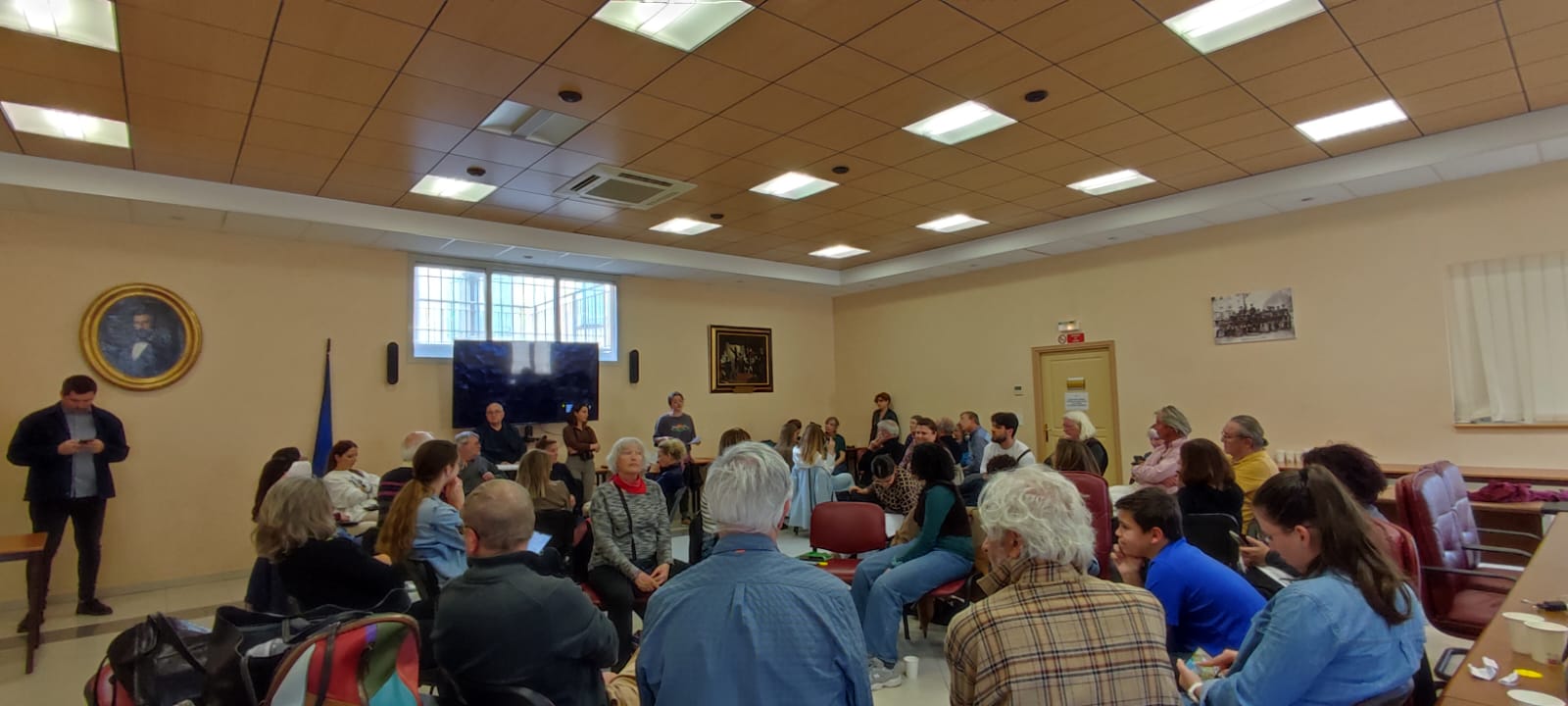
These results are the opinions of the participants; each idea could be shared or presented by one single person in some cases. All of them food for thought in relation to disinformation and democracy in Europe.